- Department:Hazard Control Division
I. Overview
The Regulations Governing Toxic Chemical Substances Hazard Prevention and Response Plan have been formulated in accordance with the provisions of paragraph 3 of Article 10 of the Toxic Chemical Substances Control Act (hereinafter referred to as the Act), and the Regulations Governing Toxic Chemical Substance Response Equipment and Detection and Alarm Equipment have been formulated in accordance with paragraph 2 of Article 9 of the Act.
II. Hazard Prevention and Response Plan
The Regulations Governing Toxic Chemical Substances Hazard Prevention and Response Plan (hereinafter referred to as the RGRPRP) was amended and promulgated by the EPA on November 18, 2009 to effectively improve the practicality of hazard prevention and response plan, to supervise toxic chemical operators in implementing their response plans, and to enhance hazard prevention capacity and response ability at plants, in order to effectively achieve the objective of disaster prevention and mitigation.
The hazard and response prevention plan requires that the operators draw up plans for hazard prevention management measures related to disaster prevention and protection training, drills, command and reporting mechanisms, disaster response action, and disaster recovery, and to make the summary of the plan available to the public at the municipal, county (city) government or township (town and city) office.
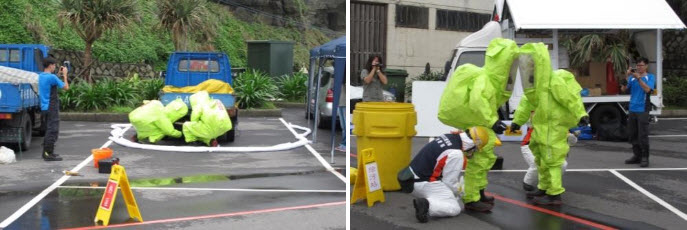
Hazard prevention and protection training conducted by the operators
In addition, the Bureau also provides onsite guidance for toxic chemical substances operators, as well as domestic and overseas training for commanders, in hopes of reducing the risks of hazards and enhancing Taiwan's ability to respond to toxic chemical substances.
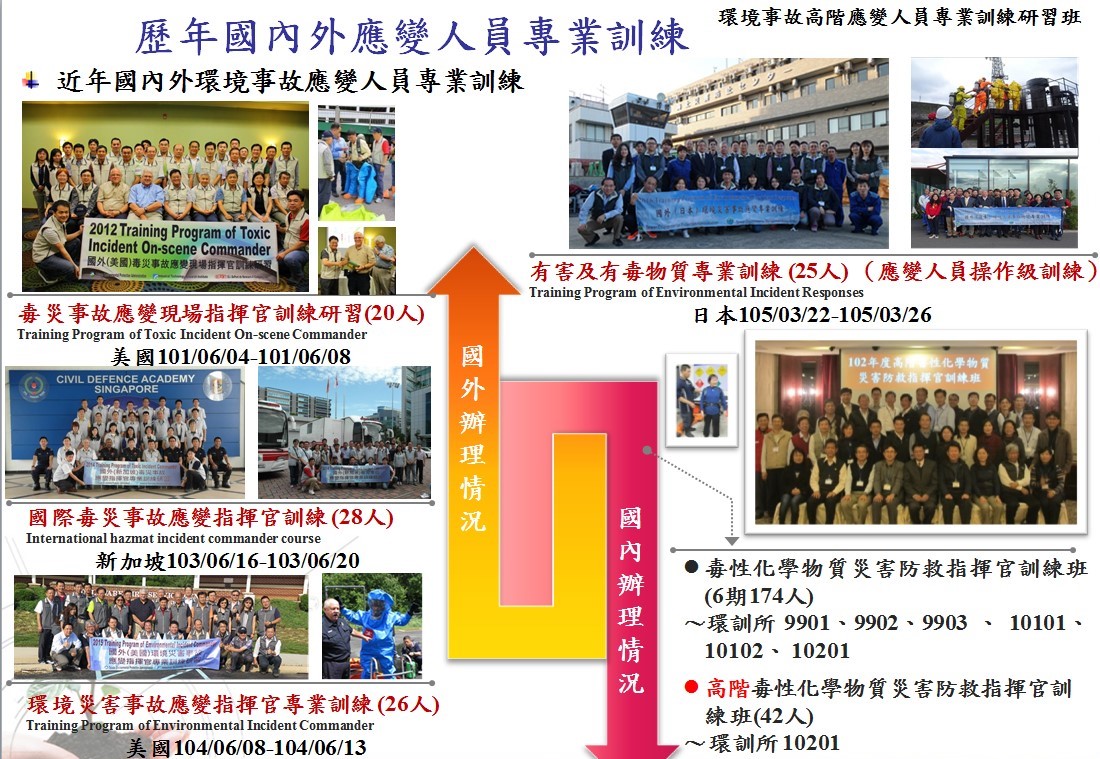
Continued domestic and overseas professional training for response personnel
Moreover, to enhance disaster mitigation and prevent accidents, the Bureau also publishes environmental accident newsletters to analyze representative cases, causes and accident handling processes, in order to help relevant toxic chemical substance operators reduce the occurrence of hazards and enhance response capacity.
- Environmental accident newsletter
https://toxicdms.moenv.gov.tw/edm/
In addition, to improve the efficiency of toxic chemical substance disaster prevention and protection, the Bureau has established a toxic disaster prevention and protection management information system for toxic chemical substance information queries, real-time disaster information, and decision making. It can rapidly provide information about toxic chemical substances and operation sites to response personnel at disaster sites.
- Toxic disaster prevention and protection management information system
https://toxicdms.moenv.gov.tw
III. Response Equipment and Detection & Alarm Equipment
According to Article 39 of theToxic and Concerned Chemical Substances Control Act, response equipment shall be kept available while classes 1 to class 3 toxic chemical substances and concerned chemical substances are in the process of being handled. Therefore, the Regulations Governing Toxic Chemical Substance and concerned chemical substances Response Equipment and Detection and Alarm Equipment have been formulated for installation, construction, operation, inspection, maintenance, service, calibration, record-keeping, record preservation, and other binding matters with regard to response equipment and detection & alarm equipment. An operator must submit an installation and operation plan to the local competent authority for filing for future reference before it is allowed to apply for relevant license and registration documents. To improve the safety management of substances and strengthen the immediate response and protection of the personnel at the operation sites when disaster occurs, a summary of the regulations is given below:
- Preparation of personal protective equipment
- The Regulation specifies that the operator shall install a safety blockage system and detoxification facilities when phosgene and chlorine achieve criteria for mass operation.
- It also specifies the structure and function, set points, detection errors and installation locations for detection and alarm equipment.
- Related documents are filed for future reference.
We hope this Regulation can strengthen the effectiveness and material/equipment preparation capacity of the response equipment, and detection & alarm equipment at the toxic chemical substance and concerned chemical substances operation sites, and thus enhance self-management of toxic chemical substance and concerned chemical substances operation sites, and reduce disaster risks.
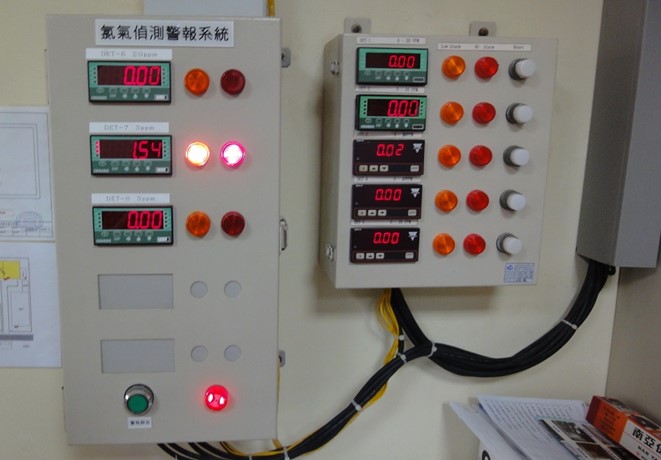
Oxygen detection and alarm equipment
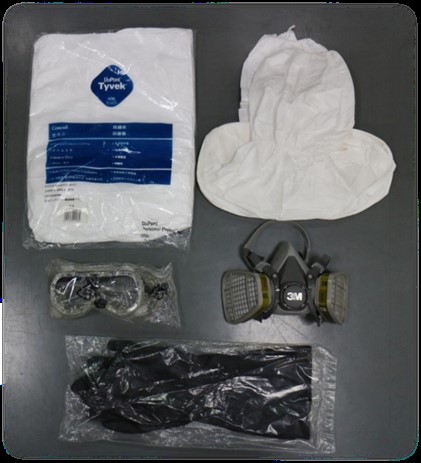
Personal protective equipment


